Picture a Canadian homeowner who spent the past year hoping rates would keep falling. A mortgage rate renewal could be coming up, and every cut will lead to a smaller payment.
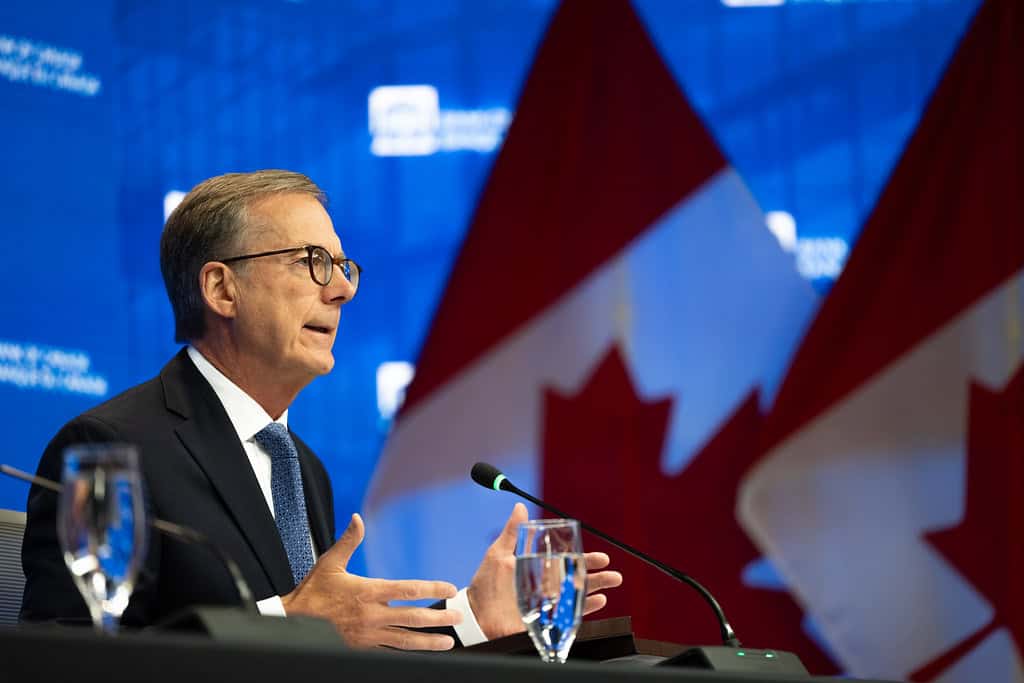
However, earlier this week, the Bank of Canada lifted the overnight rate by a quarter point to 2.5%, the first hike in over three years.
Alternatively, if you have a GIC (guaranteed income certificate) about to mature, higher rates could mean a better payout when you reinvest.
For TFSA investors, it raises a fair question: Where should tax-free money be deployed right now?
Why the Bank of Canada raised interest rates to 2.5%
The BoC said the hike was essential to keep high energy prices from translating to higher inflation.
Canada’s inflation rate rose to 3.1% in September, and the BoC’s October Monetary Policy Report forecasts inflation averaging 2.9% in 2026 and 3.1% in 2027. The report does not expect inflation to return to the 2% target until mid-2028.
The central bank explained that another rate hike may be needed, but it will “proceed carefully.” The next decision is on December 9.
Notably, Canada’s unemployment rate is around 6.5%, which does not provide BoC with the flexibility to raise interest rates aggressively over the next 12 months.
What a rate hike means for your TFSA
Canadian investors should consider owning blue-chip dividend stocks in the Tax-Free Savings Account (TFSA) that consistently outpaces inflation over time.
Typically, the best dividend stocks raise payouts consistently each year, which enhances the yield-at-cost in the long term.
One such TSX stock TFSA owners could hold in October 2026 is Royal Bank of Canada (TSX: RY). It is Canada’s largest bank by market cap and has a long record of paying and raising its dividend.
In May, the board lifted the quarterly dividend by $0.12, or 7%, which translates to an annual payout of $7.04 per share, up from $2 per share in 2010.
RBC stock offers a yield of 2.6% right now, which is not too attractive. However, if we adjust for dividend reinvestments, the banking stock has returned close to 400% since October 2016.
In the third quarter, RBC reported a return on equity (ROE) of just over 18% and a CET1 (common equity Tier 1) capital ratio of 13.5%. CET1 is a measure of how much cushion a bank holds, and a higher ratio is favourable.
RBC also said it disbursed just over $80 billion in new loans in fiscal Q3.
What RBC management says about rising interest rates
On September 16, RBC chief financial officer Katherine Gibson spoke at the Barclays Global Financial Services Conference. An analyst asked how a BoC hike would affect the bank, and Gibson stated:
In our disclosures, we note that a 25 basis point increase on the short end of the curve translates roughly into about $35 million annually net interest income.
Net interest income is the difference between what a bank earns on loans and pays on deposits.
That boost is modest for a bank this size, so I would not buy RBC for a rate bump alone. Gibson also warned that higher rates could slow the shift of client money from term deposits into investments, which are higher-margin products.
On risk, she said RBC feels “very comfortable” with its reserve position, given retail loan provisions are at their highest in 20 years. Still, a soft job market is why I will watch loan losses in RBC’s next quarterly results.
How I’d split my TFSA after the hike
Here’s how I will structure my TFSA after the rate hike.
- Keep an emergency buffer in cash or a GIC inside the TFSA, so I am never forced to sell stocks in a downturn.
- Add to a quality dividend grower like RBC gradually, since additional rate hikes are possible.
A rate hike is not a reason to panic. It is a reminder to balance safety and growth, and to let tax-free compounding do the heavy lifting.